Creating a robust ERM framework in the era ofdigital disruption, market instability, and newregulatory compliance
Conference Day One: Monday, 29 June 2020
9:50 am - 10:00 am
Registrations & networking
10:00 am - 10:05 am
Opening remarks by Chairperson
Alexander Larsen -
President,
Baldwin Global Risk Services Ltd.

Holistic risk management has never been more crucial – 2020 and beyond
Today’s turbulent business landscape is leaving organisations to continuously evolve and relook strategies to respond to unforeseen events while ensuring continuity and competitiveness. With increasing risks and uncertainty, organisations are increasingly adopting a holistic and integrated approach to mitigate all potential risks.
10:05 am - 10:20 am
KEYNOTE - Taking on tomorrow’s risks by enhancing old and adopting new risk management practices – What’s in store for 2020 and beyond?
Atiq Ahmed Bajwa -
Manager, Enterprise Risk Management,
Marafiq
In an increasingly uncertain financial, digital and geopolitical environment, corporate risk leaders are faced with an increasing pressure to improve their strategies to identify, assess and mitigate the most serious corporate risk threats.
- What are some of the new strategies and tools available to improve ways in which risk is identified, evaluated and mitigated?
- How to ensure that your organisation has an up-to-date ERM framework that is robust and agile enough to respond to future risks?
- Aligning corporate risk strategy with the overall organisational strategy

10:20 am - 10:35 am
Leading organisations in disruptive times - a risk management insight
Gregory Irgin -
Global Risk Leader,
Emirates Global Aluminium
As risk professionals, we can find ourselves preoccupied with a C-Suite reacting to a crisis and the ‘experienced experts’ facing a dogma in the solution space.
COVID-19 has proven the value of integrated risk management and an established risk and resilience model.
We will consider this alongside the shareholder value to a changing mindset.
- Leadership Model - people look to leaders in times of crisis
- Frameworks - value and danger
- Escalation Model - challenge engaging thematic risk in full dimension
- Trade-off - value in embracing different leadership skills for company success
10:35 am - 10:55 am
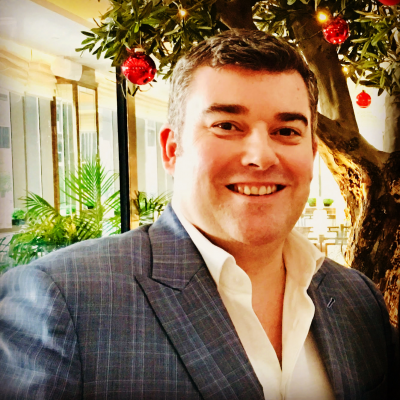
PANEL DISCUSSION: The changing role of a CRO - from risk management to value management
Atiq Ahmed Bajwa -
Manager, Enterprise Risk Management,
Marafiq
Dr. Yousef Padganeh - Risk Leader and Member, PRMIA Education Committee
Sergey Konov - Ethics & Compliance Officer, Middle East & Africa, GSK Consumer Healthcare
Ahsan Ali - Chief Risk Officer, Habib Bank AG Zurich
Ozge Gurgur - Senior Enterprise Risk Manager, Petrofac
Over the past two decades, the concept and practice of risk management has grown and matured significantly. However, it has done so in very inconsistent ways, with different organisations and industries creating their strategies and defining them differently with different responsibilities, authority, role, tolerance levels and interrelationships for internal controls, risk management, enterprise risk management and strategic risk management.
The COVID-19 was a fine reminder of the importance of ERM to organisations. Due to the evolving nature of risks and growing impact of incidents, the CRO in a boardroom is more influential and responsible than ever. Investing in risk management tools and strategies is no more to just identify and mitigate risks but also to create incremental value and business opportunities, from both a financial perspective but more from a reputational and culture perspective.
Moreover, there has been little discussion of how these considerations are to be related to the overall performance, objectives and resource allocations of organisations.
This panel will discuss how the sound ERM strategy can link all of these topics and related concepts into a management framework effectively while delivering maximum stakeholder value for enterprises.


10:55 am - 11:10 am
TECH TALK: Creating value and resilience by aligning IT and risk management practices
With the increased number of cyber threats and the advances in cross-organisational tech adoption, IT and risk management are colliding more than ever. Organisations and risk professionals are under the pressure to ensure this collision is not destructive but instead it creates a constructive and synergetic relationship that can foster organisational growth.
- How is the advance tech adoption and implementation impacting the risk management practices?
- Balancing the risk of AI, IOT, RPA, blockchain adoption with the opportunities these tech advancements bring for the organisation.
- Leveraging on technology to create smarter, agile and real time ERM frameworks to create flexibility and be in pace with the nature of change in the digital world
11:10 am - 11:25 am
Towards a better prepared, resilient and tech backed organisation – How to be prepared for the next big crisis?
Revisiting risk governance
Always mentioned as the most important aspect of ERM and often the toughest element of an ERM model, governance mechanisms and policies have to be continually relooked into to ethically manage risks. Today’s globalised world with increased interconnectedness, social networking and ever evolving technologies are much ahead of governance mechanisms, making risk professionals do what they can to revisit and benchmark their mechanisms with that of the world.
11:25 am - 11:40 am
CASE STUDY: Risk management for family businesses
Dr. Wael Eid -
Chief Risk Officer,
Sedco Holding
In the GCC, family businesses possess great power and market share across several industries, hence being influential to the happenings of the market. Family businesses in the region have to remain cautious to avoid reputational losses. Ensuring the right risk governance programme is in place is crucial for family businesses to thrive and grow in markets with global competition
11:40 am - 11:55 am
Risk governance for 2020 and beyond – How to enhance old and adopt new practices for business continuity and governance
Arif Zaman -
Head of Internal Audit Department,
Emaar Industries & Investments
With increasing uncertainties comes increasing pressure on risk, audit, compliance and strategy leaders within organisations to ensure preparedness for all opportunities and risks towards them. Risk governance has evolved with the ever-evolving nature of risks with more focus on culture, internal audit and mitigation techniques.
- New strategies, models and practices available to create efficient governance models
- The importance of risk and corporate culture
- Aligning corporate risk strategy with the overall organisational strategy
- Embedding culture into internal audit models to analyse and assess the influence of culture on risk resiliency

11:55 am - 12:15 pm
PANEL DISCUSSION: Controlling internal risks to recession proof your organisation and ensure business continuity – Effective internal auditing and governance
Tanu Goel -
Chief Internal Auditor,
Emirates Development Bank
Abhishek Nayak - Head - Risk Management, HDFC INTERNATIONAL LIFE AND RE COMPANY LIMITED
12:15 pm - 12:30 pm
TECH TALK: Cyber governance – Strengthening the cyber landscape to better respond to cyber crimes
The cyber world is perhaps the most evolving, risky, and unpredictable area for risk professionals today. For ransom, reputational damage, infrastructure damage or any other reasoning, organisations face cyber threats more than any other risks. Ensuring a resilient, robust and agile cyber landscape and governance system is in place is no more a luxury but a necessity.
- How to cyber proof new and upcoming technologies such as AI, cloud, RPA and more
- Identifying, monitoring and countering cyber risks in real-time
- The key components and processes in an effective response plan for a cyber-incidence
- Risk – IT convergence – working closely with each other to fight cyber risks
Technology
12:30 pm - 1:00 pm
ENTERPRISE RISK MANAGEMENT (ERM) PRINCIPLES: Enterprise Risk Management – A Chief Risk Officer’s (CRO) perspective and the changing role of technology
Venkatesh Kallur -
Chief Risk Officer,
Alizz Islamic Bank
With ERM comes in a lot more importance to the IT infrastructure in an organisation. ERM frameworks and models require robust and efficient technologies in place to get the most out of them.
- Importance of ERM framework for automation
- Role of risk appetite & institutionalisation - CRO perspective
- Importance of risk analytics - a collaborative partner with business
- How to let the business own the risk
- Finally what automation means to CRO
1:00 pm - 1:20 pm
TECHNOLOGY RISK: Embedding technology risk with ERM
Waqas Haider -
Director Control Management, Risk & Compliance,
EITC (du telecom, Edara, Virgin Mobile) - UAE
As organisations go on a race to be the most digitally advanced, customer friendly and innovative, risk professionals are tasked to cover and assess all potential risks while onboarding new technologies.
- Creating a full proof risk roadmap for onboarding new technologies
- Developing response testing and measurement methods
- How to evaluate and assess all possible risks from the new technologies and creating incident plans for them

Waqas Haider
Director Control Management, Risk & ComplianceEITC (du telecom, Edara, Virgin Mobile) - UAE
1:20 pm - 1:40 pm
DATA AND TECH CULTURE DEEP DIVE: Towards a tech enabled culture - how to become a data driven leader to enhance organisation value and create business opportunity
- Ensuring your team is informed about and trained on new technologies, their benefits and the risks associated with them
- Leveraging data effectively to remain proactive and facilitate informed, risk-based decisions
- Driving organisational objectives and business opportunities through a futuristic outlook amongst staff
- Improve safety, productivity, brand value and reputation through a competent and well informed personnel